Fully refundable up to 30 days before departure. Secure payment via Stripe
5/5 Reviews
Everest Base Camp Trek – 15 days
Kathmandu- Lukla- Namche- Tengboche- Dinboche- Lobuche- Tengboche- Monjo- Lukla- Kathmandu
Trek Area
Everest Trekking

Duration
15 Days

Suitable Season
March - April, September - December

Difficulty level
Moderate

Highest Altitude
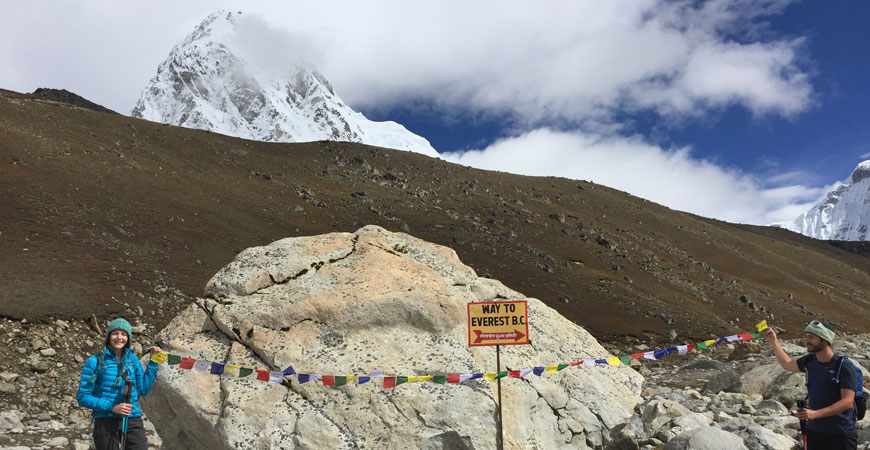
5549m at Kalapattar

Group Size
From 1 Person & above

Trip Starts/Ends
Kathmandu

Nights Spent
1

Walking Hours
4- 7 hrs

Accommodation
Hotels in Cities, Lodges/ Guest Houses in trek

Meal
Breakfast in City & all meals during trek included

Transport
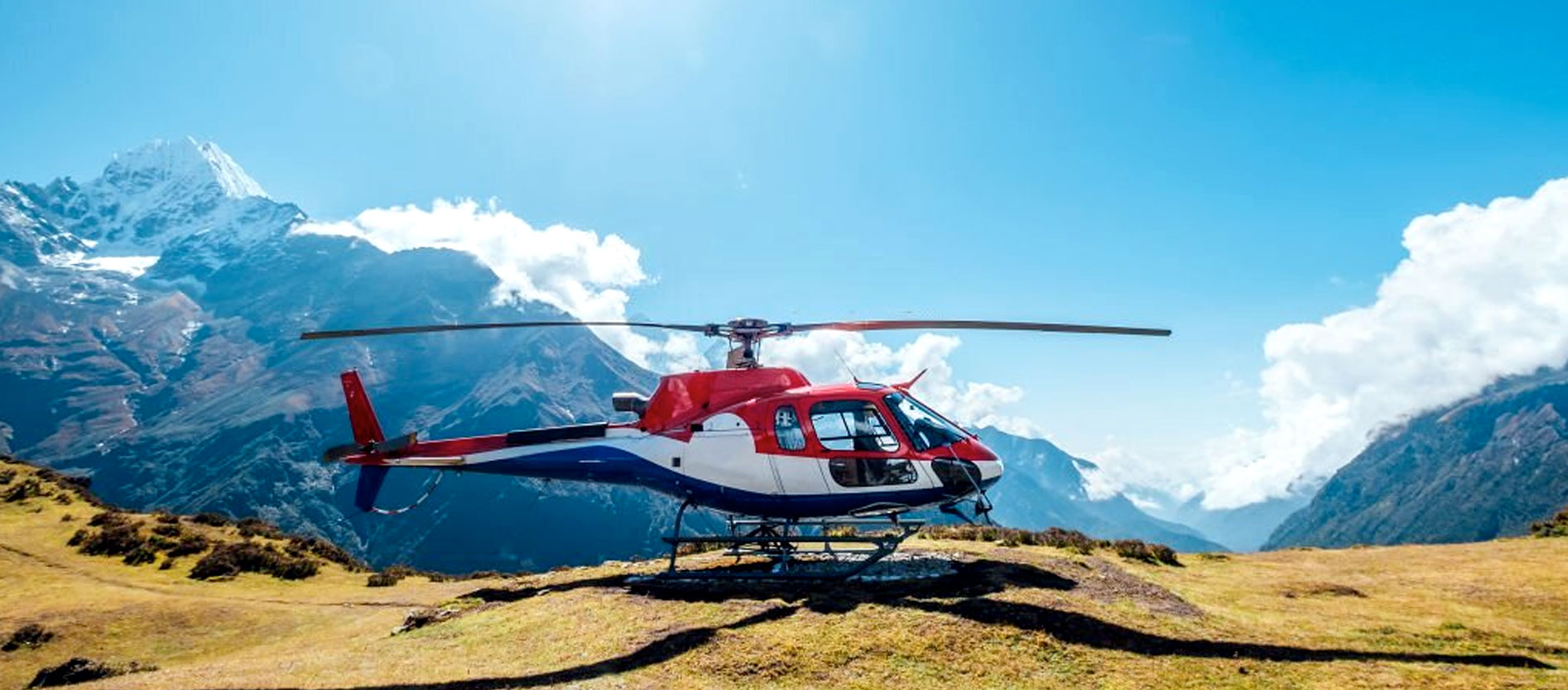
Private Comfortable Car/ Van/ Hiace & domestic flights
Everest Base Camp Trek will take you to Mt. Everest (8848 m.), the highest point in the world. The most adventurous trail to Everest Base Camp does not require being experienced and a perfect trekker; anyone who is physically fit can go for it!
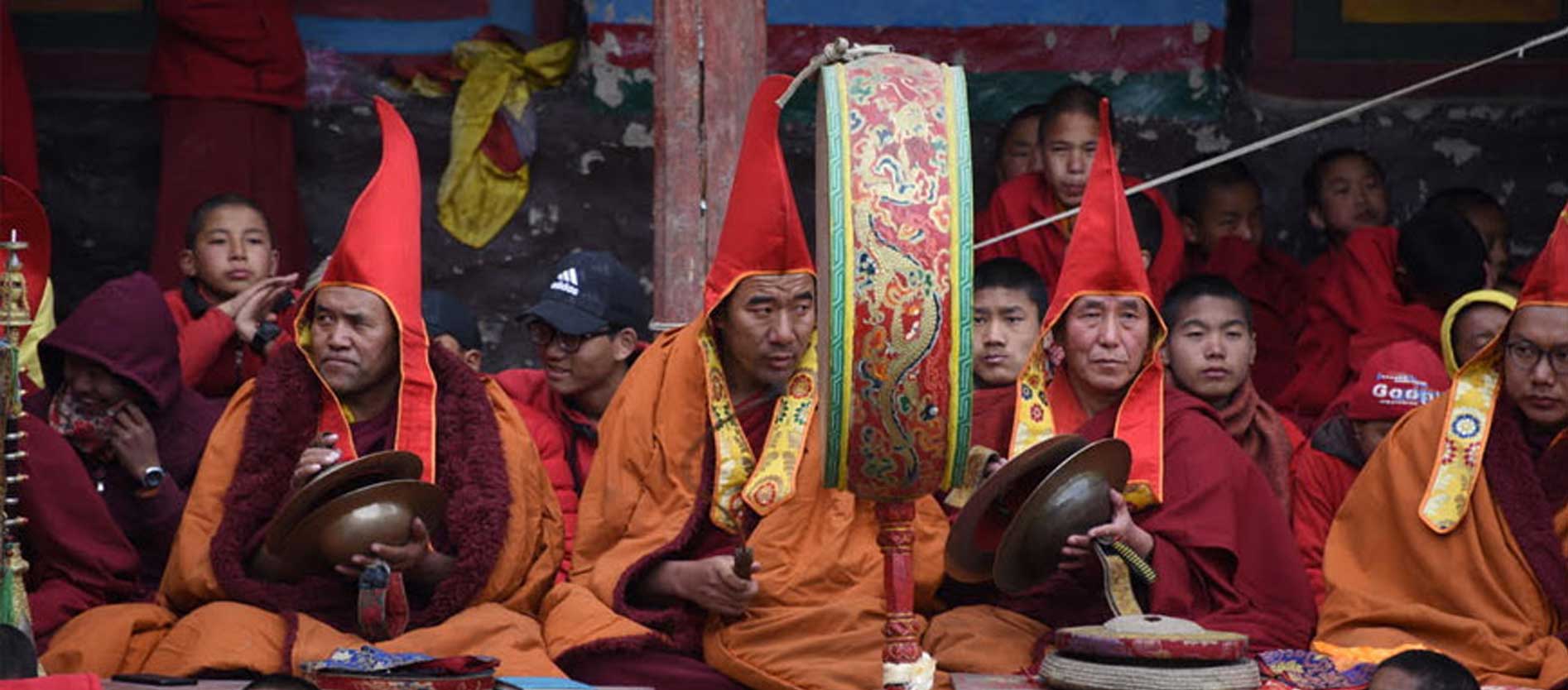
Providing the most thrilling lifetime experience, Everest Base Camp trekking offers a chance to travel through the long-established Sherpa settlements and Gumbas i.e. Buddhist monasteries.
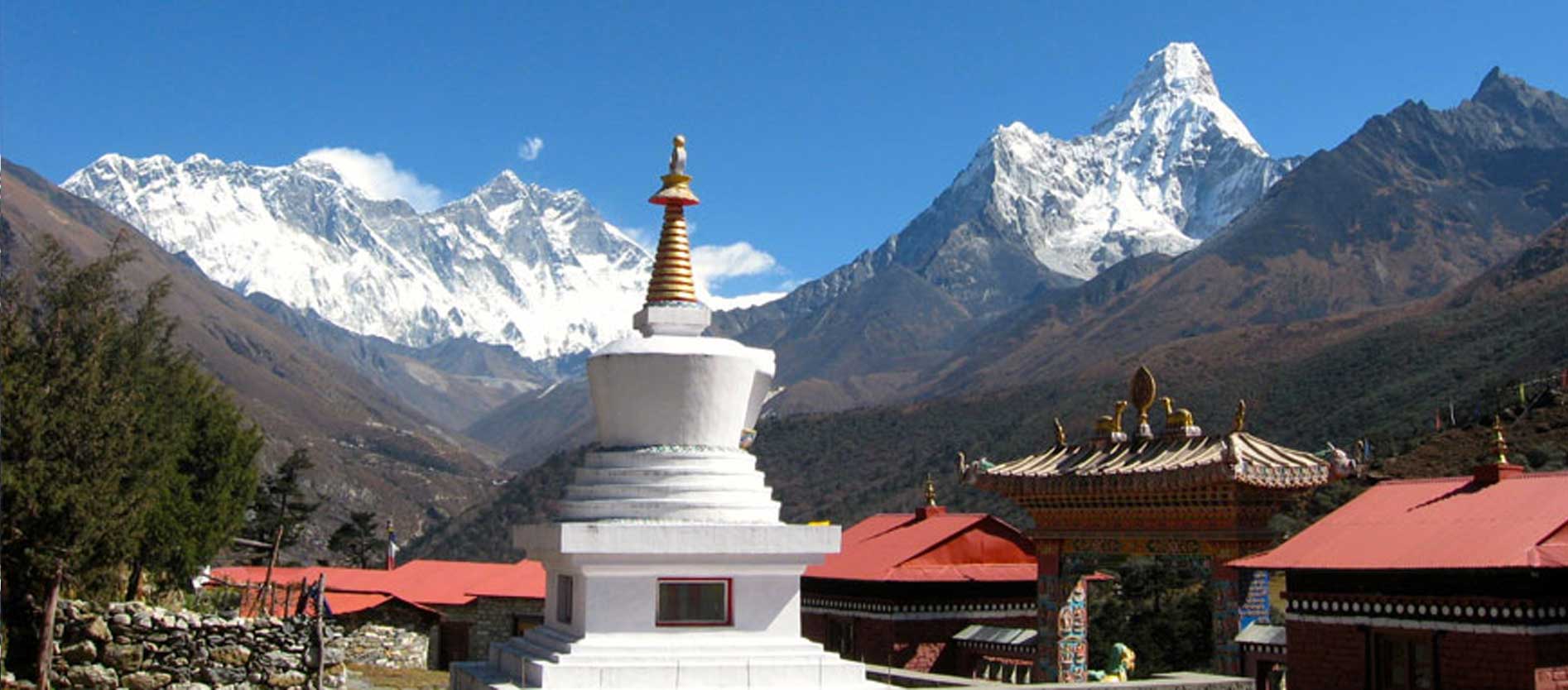
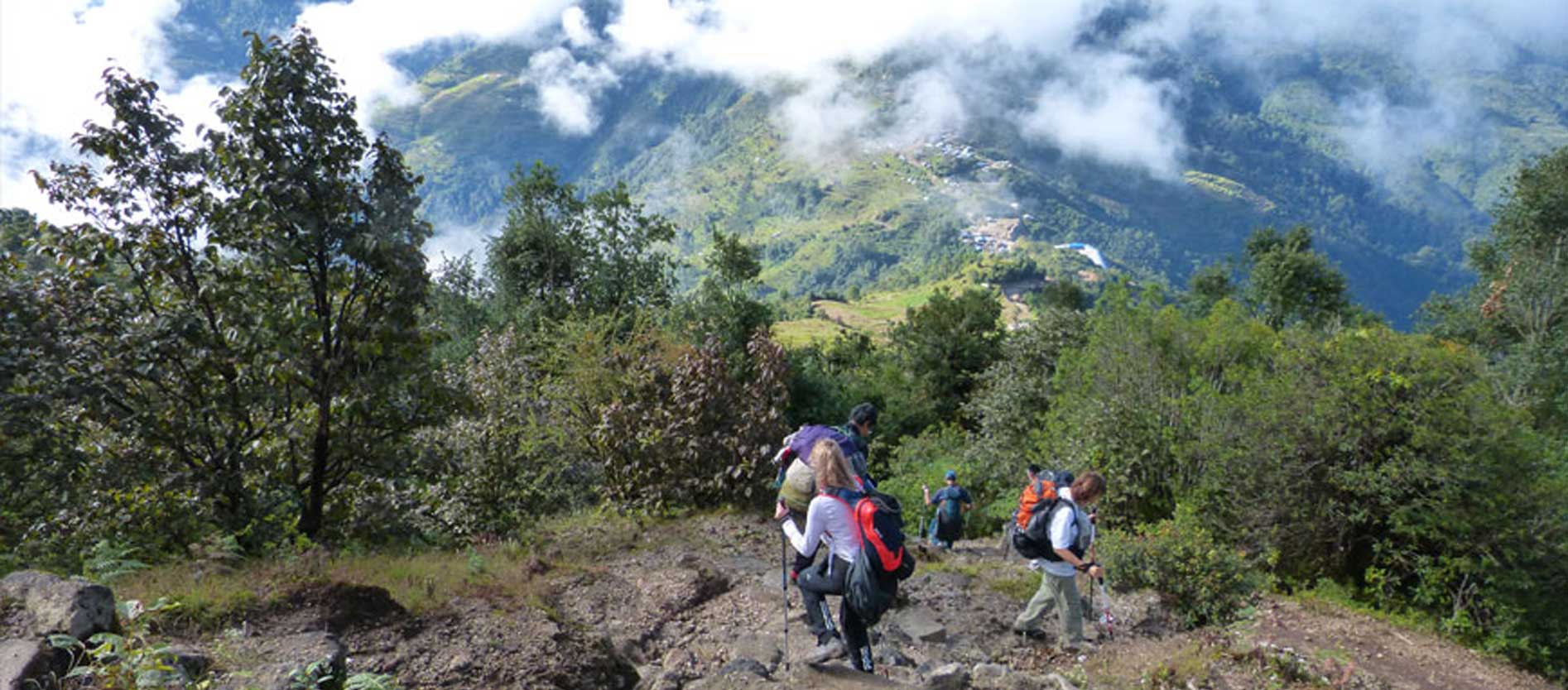
The trek starts after arriving at Lukla airport with a scenic flight; walking along the Dudh Koshi River looking at the beautiful settings on the way to Namche Bazaar. You will come across the renowned Tengboche monastery, a striking place which has a panoramic view of Ama Dablam, Mt. Everest and other enormous peaks. Kalapathar (5545m.) will reward you with stunning views of sparkly peaks and the Khumbu glacier. The Sherpa museum, the panoramic view from Syanbu-che, the Sherpa culture in Khumjung village, beautiful views from Kalapatar are the major highlights of the Everest Base Camp Trek.
Apart from the splendour of the great Mt. Everest set in the backdrop, other gigantic peaks can be marked too on the way to the Everest Base Camp including Mt. Pumori (7161m.), Mt. Changaste (7550m.), Mt. Nuptse (7855m.), Mt. Amadablam (6856m.), and more.
This 15 days tea house trek is entirely designed for those trekking enthusiasts who are capable of taking challenges. It will be a trek concerning high altitudes but you can trust Nepal Tibet Tours and Treks as we do not compromise on your safety and comfortability. Make sure to talk to your representative at Nepal Tibet Tours and Treks about this incredible trip. Our experienced and qualified guides will assist you on your excellent adventure.
Note:
The following program can be tailor made as per your request. We can adjust the program as per your time and interest. Activities such as Rafting, visit to Chitwan National Park, Paragliding in Pokhara, Jeep flyer, Mountain flight in Kathmandu, etc can be customised in your trip. We can use the morning 8 am flight to Pokhara, which only takes 30 minutes and we can make a short trip to Pokhara after the Everest Trekking. Please do not hesitate to write to us about your interests and concerns; we will make the itinerary to fit your needs.
Trip Itinerary
-
 Day 01Welcome To Kathmandu (1400m)
Upon your arrival in Kathmandu, you will be greeted by our representative at the airport and then s/he will usher you to the hotel. You will be briefly described about your tour and checked into the Hotel. You will have the rest of the day to yourself and overnight at the hotel.
-
Day 02Kathmandu - Lukla (2827m) - Phakding (2656m)
From Kathmandu, you will take an early flight in the morning to Lukla (2827m.). You can get a close view of massive mountains adjacent to Nepal and China (Tibet) in the 40 minutes flight. The same afternoon, you begin your trek by moving down from Lukla to Dudh Kosi River and take the main track to Namche Bazaar, located just over Chaurikharka (2713m.). The trail will be a moderate descent. After you reach the tiny village of Ghat (2550m.), you have a short walk to Phakding. On your way, you will come across beautiful monasteries and stone carved prayer walls. Today will be about a 3 hour walk. Overnight in Phakding.
-
Day 03Phakding - Namche Bazzar (3440m)
From Phakding, you start off with a small climb to Jorsale. You advance through a waterfall, from where the path is filled with splendid rhododendron forests, giant firs and magnolia trees. You trek to Namche coming across a few bridges and then go up quite a few hundred metres, a vertical descent and another steeper climb through the forest. Today, you trek for about 4 hours and stay the night at trekkers lodge in Namche Bazaar.
-
Day 04Acclimatization Day in Namche Bazzar (3440m)
Today, you stay in Namche Bazaar to become accustomed to the altitude. Namche Bazaar is a bustling village located in a large sheltered hollow. After breakfast, you can go for a walk towards Thami (3810m.) over the Bhote Khola River Valley. You can also go to the National Park Headquarters to watch the amazing sunrise and sunset views. You can observe the Sherpa lifestyle and cultures too. The place offers you a beautiful panorama including scenery of the Khumbu peaks and arresting views of the Everest. You can take a healing break before your trek tomorrow.
-
Day 05Namche Bazzar - Tengboche (3900m)
From Namche Bazaar, you set off to Tengboche walking through the radiant rhododendron forest. You will see the scenic views of Mt. Amadablam, Mt. Everest, Mt. Tabuchi, Mt. Thamserku etc on your way. It will be a 6-7 hours trek and the trail will be mostly narrow and steep. You will descend towards Dudh Koshi River and then ascend to reach the Tengboche monastery. You will stay the night in a lodge.
Includes: -
Day 06Tengboche - Dingo (4410m)
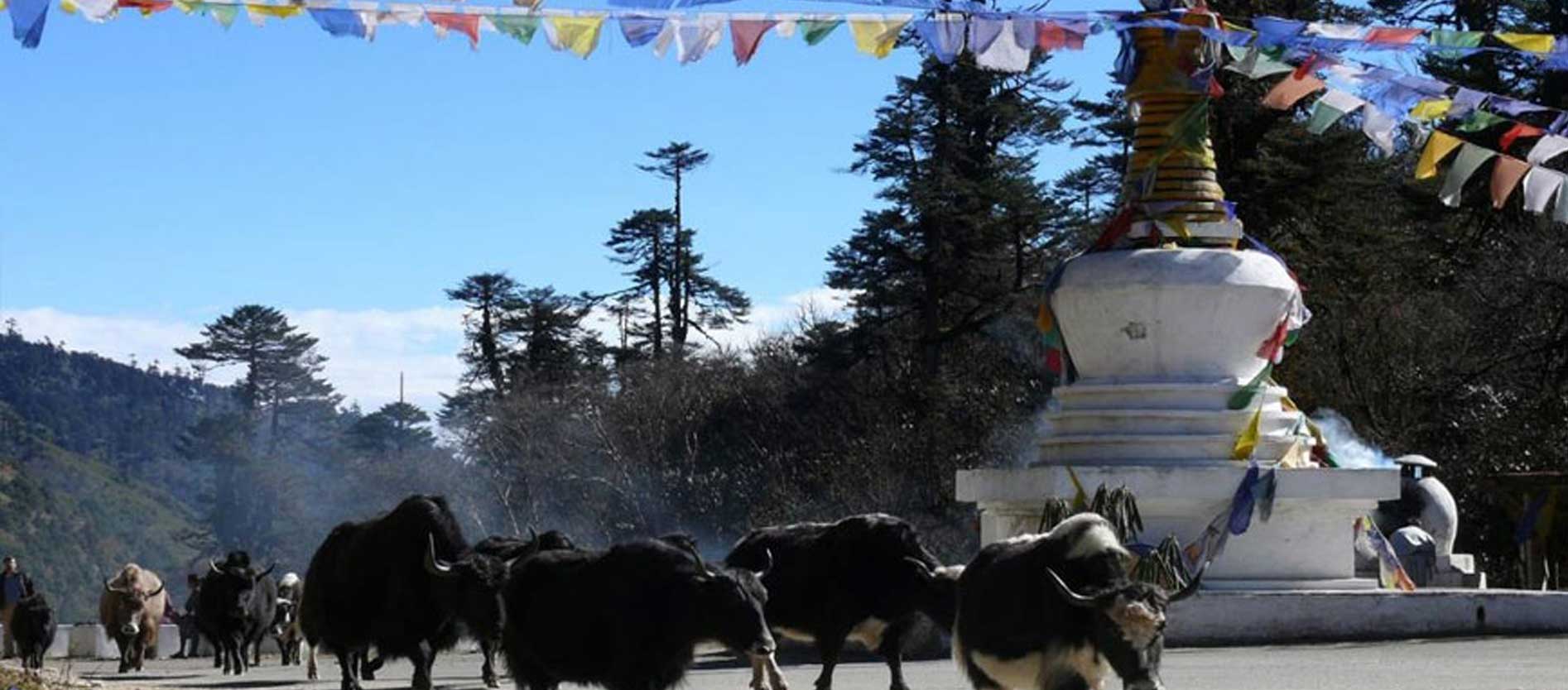
Today, you depart from Tengboche to Dingboche. Along with the amazing views of the mountains, you will see a lot of yaks grazing. On your way, you will come across Pangboche village which has history before the start of Everest trekking. After an hour of ascending, you will reach your destination for the day.
-
Day 07Acclimatization Day at Dingboche
Today, you will have to get accustomed to the altitude for further trekking tomorrow. So, you will climb a few metres up. There are hills above Dingboche for the climb. It will be around 3-4 hours walk. You will get a beautiful panoramic view as a reward. Then, you will return to your lodge in Dingboche.
-
Day 08Dingboche – Lobuche (4900m)
Departing Dingboche, you will today trek for about 6-7 hours to reach Lobuche. On your way, you will cross a suspension bridge in Thukla and ascend from the Khumbu glacier. You reach Lobuche pass where memorials of people who lost their lives in the mountain are built. Your trek ends in Lobuche and you will stay the night in a lodge.
-
Day 09Lobuche – Gorakshep (5140m)
Today, you will have a little strenuous trek from Lobuche to Gorak Shep. The 2-3 hours trek will elevate about 300m and follow through barren land, grazing land and steep moraine. You will walk beside the Khumbu valley. You cross the Changri Nup and Changri Shar Glacier that originated from the surrounding peaks of Pumori (7,161m) Changri (6,027m) and Chumbu (6,859m). Tonight, you stay in a lodge in Gorak Shep.
-
Day 10Gorakshep – Everest Base Camp (5357 m) – Gorakshep
From Gorakshep, after trekking for about 4 hours, you reach the Everest Base Camp. You will come across the Khumbu Glacier which sets the way between the roughly gleaming ice peaks and passes the crevasse. Then, you reach the base camp of the highest mountain in the world. It will be an incline in the altitude and might be a difficult trek but your achievement will be in superlatives. You walk down to Gorakshep for the night.
-
Day 11Gorakshep – Pangboche (3985 m)
Today, you move from Gorakshep downwards passing Lobuche and Duglha and arriving at Pheriche. After having your lunch, you traverse the Khumbu Khola on a wooden suspension bridge and go behind the Imja Khola to Pangboche. You trek for 5 hours today and stay the night in a lodge in Pangboche.
-
Day 12Pangboche – Namche (3450m)
From Pangboche, you trek down to Namche. You will come across a river and make your way up through birch and rhododendron forest to Tengboche. From Tengboche, you move down to the bridge above the DudhKoshi at Phunki Tenga. Then, you return back to Namche. You walk for around 5 hours today and stay at Namche.
-
Day 13Namche - Lukla (2800m)
From Namche, you follow the Dudh Koshi river and arrive at Lukla after about 6 hours of trekking. You will stay the night at a lodge in Lukla.
-
Day 14Lukla - Kathmandu
Today, you fly back to Kathmandu by morning flight. On onset in Kathmandu, you will be taken to your hotel. You will have the afternoon to yourself, you can go hang around the city. Overnight at the hotel.
Includes: -
Day 15Departure
Today is the last day of your stay in Nepal. Our airport representative will transfer you to the Airport. We, Nepal Tibet Tours & Treks, wish you a safe journey back home.
Trip Note
We can customize this program as per request / as per need, budget, time, etc.
Included/Excluded
- Accommodation as per different standards of your choice in the City and simple Lodge or Tented Camp in Trekking
- English speaking Trekking Guide & porter
- All the ground transportation as per Group Size & standards ensured in Tour/Trek from start to end
- Every day 3 Meals Trekking portions; Breakfast, Lunch & Dinner provided
- At the Camping Trek, our Cook prepares & the Tea House Trek will provide at local Lodge.
- All fees on Trek
- Travel insurance
- All the expenses of personal choices, drinks
- Lunch and dinner in the City
- All the Delay due to weather; situation beyond our control
- Nepal Visa, (USD30 for 15days,) and Airport Tax, Tipping, etc.
- All the expenses of personal nature, drinks
Gears and Equipment

Clothing
- Boots: Lightweight walking boots; If it is brand new, “walk them in” to avoid blisters. Also bring spare laces.
- Track shoes: A pair of track shoes; To wear in the camp or when the boot is wet.
- Jacket: A warm jacket; Fibre fills or down should be adequate. This is essential during winter from December to February. A rainproof jacket with hood or a poncho. Get the one that is guaranteed waterproof.
- Shirt and Sweaters: Woollen shirts and thick sweaters; these are essential during the winter season (December to February). Thick sweaters can be purchased in Kathmandu. A lightweight long sleeved t-shirt is suitable for avoiding sunburn.
- Trousers: A pair of trousers; Jeans are not suitable to wear on treks. Cheap, loose, cotton pants are available in Kathmandu. Heavyweight trousers are useful higher up in the mountains in the morning and at night. Windproof or waterproof trousers are required on all treks going above 10.0 ft.
- Tracksuit: A tracksuit is comfortable to wear in camp and in the tent. You want to add at least two pairs of loose fitting long shorts or skirts.
- Underclothes: Thermal underwear is the best for sleeping during the winter.
- Sun Hat, SunCream/Block & Lip Salve: Choose a high factor sun cream (Factor 20 or stronger) to protect your skin against the sun at high altitude. A combination sunblock/lip salve is ideal for facial protection. A sunhat having a wide brim should be used which covers your face and neck. A woollen hat is a must during winter.
- Glove/ Sandal/ Socks: A pair of gloves; Leather with lining and woollen are best, 1 pair of sandals to wear in the cities and in the camp and about 4 pairs of thin and 4 pairs of thick woollen socks are required accordingly.
- Sleeping Bag: As you do not carry sleeping bags yourself, this can be either synthetic or down but it is a must for all 4 seasons. As most treks pass through a variety of climatic conditions, a long zip is a good idea. A cotton/fleece liner helps keep your sleeping bag clean. Good sleeping bags are expensive but can be rented easily in Kathmandu (Only for treks starting and finishing there.)
- Personal First Aid Kit: You should have your own supply of plasters, aspirin, diarrhoea tablets and also a comprehensive blister kit. (Please do not give medicines to local people without consulting the trek leader.)
Map
Additional Information
Everest Base Camp Trek Difficulty
The Everest Base Camp Trek is considered a challenging high-altitude trek due to the long walking days, steep ascents and descents, rocky trails, cold temperatures, and changing Himalayan weather. Although the trek does not require technical climbing or mountaineering skills, you should have a good level of fitness and be prepared to walk for several hours on consecutive days.
Everest Base Camp is located at 5,364 meters (17,598 feet), while the highest point of the trek, Kala Patthar, reaches approximately 5,545 meters (18,192 feet). The increasing altitude and lower oxygen levels can make the later stages of the trek more demanding.
With proper preparation, gradual acclimatization, adequate rest, good hydration, and a steady walking pace, the trek is achievable for many physically prepared trekkers.
Best Time for Everest Base Camp Trek
The best time for the Everest Base Camp Trek is generally during spring (March to May) and autumn (September to November). These seasons usually offer stable weather, clear skies, good mountain visibility, and comfortable trekking conditions.
Spring brings warmer days and blooming rhododendrons along the lower sections of the trail, while autumn is particularly popular for its clear Himalayan views after the monsoon. Winter brings colder temperatures and possible snowfall at higher elevations, while the monsoon season can bring rain, cloud cover, and occasional flight disruptions.
Trekking during winter or monsoon is still possible for experienced and well-prepared trekkers, but weather conditions can be less predictable and require greater flexibility.
Everest Base Camp Trek Permits
Trekkers following the standard Everest Base Camp route need the required permits to enter and trek through the Everest region. The main permits generally include the Sagarmatha National Park Entry Permit and the Khumbu Pasang Lhamu Rural Municipality Permit.
If you book an organized trekking package, the trekking company normally handles the permit arrangements on your behalf. You will generally need to provide your passport and other required information for the permit process.
Accommodation During the Trek
Accommodation during the Everest Base Camp Trek is mainly provided in traditional teahouses and mountain lodges. These offer simple and comfortable places to rest after a long day on the trail, with most rooms providing beds, mattresses, blankets, and twin-sharing arrangements.
Bathrooms are generally shared, particularly at higher elevations. Many teahouses also offer hot showers, Wi-Fi, and charging facilities, although these services may cost extra.
As you move higher toward Everest Base Camp, facilities become increasingly basic because of the remote mountain environment. A warm sleeping bag, suitable clothing, and good rest become particularly important at higher elevations.
Food During the Trek
Food is available at teahouses throughout the main Everest Base Camp route. Menus generally include a combination of Nepalese, Tibetan, and international dishes such as dal bhat, momo, noodles, fried rice, pasta, soup, potatoes, eggs, Tibetan bread, porridge, and pancakes.
Dal bhat is one of the most popular meals among trekkers because it is filling and provides a good combination of rice, lentils, vegetables, and curry. Tea, coffee, and other hot drinks are also widely available along the trail.
As you gain altitude, food choices may become more limited because supplies have to be transported over difficult terrain. However, the major settlements generally provide enough meal options to keep trekkers energized throughout the trek.
Everest Base Camp Trek Packing List
Packing correctly is essential because temperatures and weather conditions can change considerably during the trek. A layered clothing system allows you to adjust to warmer conditions in the lower valleys and much colder temperatures at higher elevations.
Some important items to bring include:
- Comfortable and sturdy trekking boots
- Thermal and moisture-wicking base layers
- Fleece and down jackets
- Waterproof or windproof jacket
- Trekking trousers and extra socks
- Warm gloves, hat, and sunglasses
- Cold-weather sleeping bag
- Trekking poles and headlamp
- Water bottle or hydration system
- Sunscreen and lip balm
- Personal medicines and basic first-aid supplies
- Power bank and charging accessories
Your passport, Nepal visa, travel insurance documents, and emergency contact information should also be kept safely accessible throughout the journey.
Everest Base Camp Trek Preparation
Proper preparation can make the trek much more comfortable and enjoyable. You should begin preparing several weeks before departure by improving your cardiovascular endurance through walking, hiking, cycling, jogging, swimming, or stair climbing.
Strength training is also useful for preparing your legs and core for long days on uneven terrain. Exercises such as squats, lunges, step-ups, and core workouts can help build the strength needed for repeated uphill and downhill sections.
Regular hiking practice is particularly recommended. Gradually increase the distance and elevation of your hikes so your body becomes accustomed to spending several hours on the trail. Mental preparation is equally important, as the trek involves challenging days, basic facilities, cold conditions, and changing weather.
Altitude Sickness on Everest Base Camp Trek
Altitude sickness is a major concern on the Everest Base Camp Trek because the route reaches elevations above 5,000 meters. Common symptoms can include headache, tiredness, dizziness, nausea, loss of appetite, and difficulty sleeping.
The best way to reduce the risk is through gradual acclimatization. Walking slowly, staying hydrated, eating properly, getting enough rest, and avoiding excessive alcohol intake can help your body adjust to higher altitudes.
If you experience symptoms, inform your guide immediately rather than trying to continue without assistance. If symptoms become severe or continue to worsen, descending to a lower altitude is essential, as serious altitude-related illness can become life-threatening.
Who Can Do the Everest Base Camp Trek?
The Everest Base Camp Trek is suitable for people with a reasonable level of fitness who are prepared to spend several days walking at high altitude. Previous mountaineering or technical climbing experience is not required for the standard trekking route.
However, you should be comfortable walking for approximately 5–8 hours on some trekking days, navigating rocky and uneven trails, and managing regular uphill and downhill sections. You should also be prepared to stay in basic mountain teahouses and experience cold temperatures.
With consistent training, a suitable itinerary, proper acclimatization, and a comfortable walking pace, the trek can be completed by many first-time high-altitude trekkers.
Communication and Internet
Mobile network coverage is available in several parts of the Everest region, although connectivity becomes less reliable as you move toward higher elevations. Network availability can also vary depending on the location and weather conditions.
Wi-Fi is available at many teahouses, particularly in larger villages, but it is generally provided for an additional fee. Internet speeds may be slower and less reliable in remote areas.
Electricity is available in most major settlements, and charging facilities can usually be found at teahouses for an additional cost. Carrying a power bank is recommended so you have backup power for your phone, camera, or other essential devices.
Health and Safety
The Everest Base Camp Trek is a well-established trekking route, but high-altitude travel naturally involves certain risks. Altitude sickness, cold temperatures, changing weather, rocky terrain, and delays caused by mountain weather are some of the main challenges trekkers may encounter.
Following a gradual itinerary, staying hydrated, carrying appropriate clothing and equipment, and listening to your guide can help reduce potential risks. Comprehensive travel insurance that covers high-altitude trekking and emergency evacuation is also strongly recommended.
If you feel unwell during the trek, communicate with your guide immediately. Taking symptoms seriously and responding early is important for maintaining your safety at high altitude.
Why Trek to Everest Base Camp?
The Everest Base Camp Trek is much more than a journey to the foot of Mount Everest. It takes you through the spectacular landscapes of the Khumbu region while offering opportunities to experience Sherpa culture, Buddhist traditions, mountain villages, and Himalayan hospitality.
Along the route, trekkers can enjoy views of iconic peaks including Mount Everest, Ama Dablam, Lhotse, Nuptse, Pumori, and Thamserku. The journey also includes memorable places such as Namche Bazaar, Tengboche Monastery, and the dramatic landscapes surrounding the Khumbu Glacier.
From the scenic flight to Lukla to reaching Everest Base Camp and watching the sunrise from Kala Patthar, every stage of the journey offers something different. The combination of adventure, culture, natural beauty, and personal achievement makes Everest Base Camp one of Nepal’s most iconic trekking experiences.
**Discounts are solely based on your group size. We do not add anyone to your group.
Similar Package
5/5 Reviews
Kathmandu Valley – Day Hiking Tour
5/5 Reviews
Upper Dolpo Trek – 28 days
5/5 Reviews